Introduction to India CDMO Small Molecule Sterile Fill
India’s contract development and manufacturing organizations (CDMOs) have become central to global pharmaceutical supply chains. Within this landscape, sterile fill capabilities for small molecules are gaining heightened importance. The demand stems from the rising need for precision, contamination-free processing, and the ability to meet both domestic and international regulatory requirements. India CDMO small molecule sterile fill services combine cost efficiency with technical sophistication, making them attractive to multinational pharmaceutical companies seeking outsourcing partners.
The sterile fill process is highly complex, requiring controlled environments, advanced equipment, and strict adherence to current good manufacturing practices (cGMP). Small molecule drugs, unlike biologics, demand specialized containment and filling systems to ensure safety, efficacy, and shelf-life stability. India’s CDMOs have invested in state-of-the-art filling lines, isolator technologies, and automation platforms to strengthen their competitiveness in this domain.
Growing Global Demand for Sterile Fill Outsourcing
The global pharmaceutical market is witnessing significant shifts. Cost pressures, regulatory demands, and speed-to-market expectations are pushing companies to outsource critical operations. Sterile fill, especially for small molecules, is one such high-value step. India CDMO small molecule sterile fill offerings address these challenges by providing both scalability and compliance at lower costs compared to Western markets.
The expansion of injectables, ophthalmic preparations, and inhalation therapies in global pipelines has created a strong demand for sterile fill partners. India’s CDMOs are seizing this opportunity by expanding aseptic processing suites and offering flexibility across dosage formats such as vials, ampoules, prefilled syringes, and cartridges. The ability to manage both clinical and commercial volumes further strengthens their value proposition.
Technical Complexity of Sterile Fill Operations
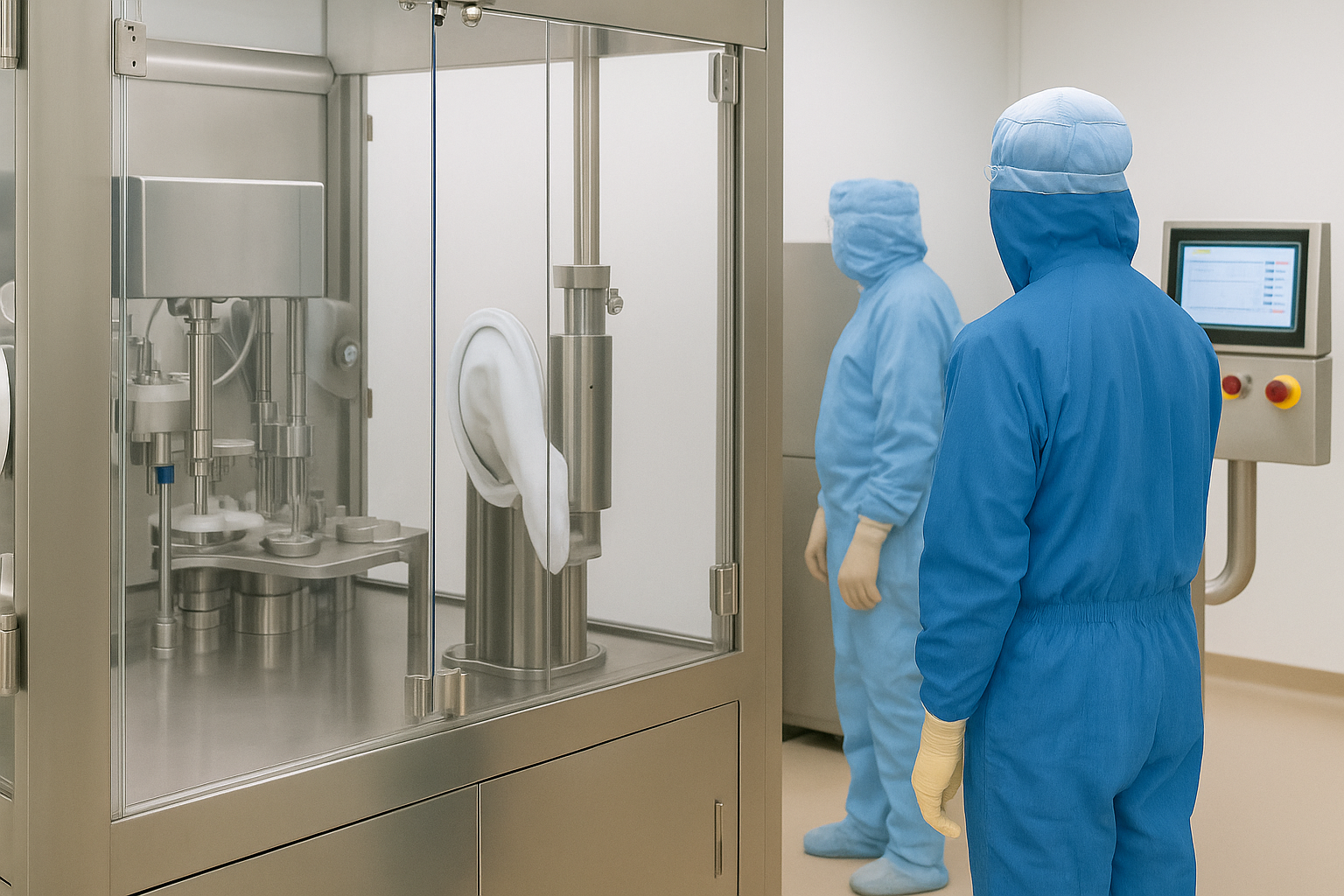
Sterile fill operations for small molecules involve stringent environmental controls, including ISO-classified cleanrooms, HEPA filtration, and strict personnel gowning procedures. Advanced filling lines integrate barrier isolators and robotic handling to minimize human contact and risk of contamination.
For India CDMO small molecule sterile fill providers, success depends on balancing automation with process adaptability. Small batch runs for clinical trials require high precision and rapid turnaround, while large-scale commercial fills demand efficiency and throughput. To meet these varied needs, Indian CDMOs deploy modular filling lines that can switch between formats with minimal downtime.
In addition, the integration of advanced analytics and monitoring tools ensures continuous quality assurance. Parameters such as particulate counts, differential pressure, and temperature stability are monitored in real time. This aligns with international quality expectations, especially those of the US FDA and EMA.
Regulatory Expectations and Compliance Framework
Compliance remains the foundation of sterile fill success. India CDMO small molecule sterile fill units must adhere to global cGMP regulations while also satisfying specific market requirements such as US FDA’s aseptic processing guidelines, EU GMP Annex 1, and WHO technical standards.
To demonstrate readiness, Indian CDMOs invest in regular third-party audits, quality certifications, and regulatory pre-approvals. Many facilities have successfully cleared inspections by authorities such as the US FDA, UK MHRA, and Japan PMDA. This track record has established India as a trusted destination for sterile fill outsourcing.
An essential aspect of compliance is robust documentation. Batch records, environmental monitoring logs, and deviation reports form the evidence base during audits. By integrating electronic batch recording systems, CDMOs streamline documentation while reducing human error.
For companies planning international distribution, understanding Regulatory Guide for Shipping Pharmaceuticals Internationally by Sea and Air becomes vital. CDMOs that can align sterile fill with export requirements help clients avoid costly delays and compliance gaps.
Integration with Pharmaceutical Cold Chain Logistics
Cold chain requirements and sterile fill procedures frequently overlap, particularly for formulations that are sensitive to temperature. Even small molecule injectables may require strict temperature ranges to maintain stability. India CDMO small molecule sterile fill services integrate cold chain considerations from the point of filling through final packaging.
Cold chain logistics involve validated storage, transport, and distribution protocols. For guidance, stakeholders often refer to resources such as Pharmaceutical Cold Chain Logistics: The Complete 2–8°C Guideline for 2025. CDMOs in India collaborate with logistics partners to ensure that filled vials or syringes are transported under controlled conditions.
Temperature excursions remain one of the greatest risks in cold chain management. CDMOs adopt validated excursion management protocols, supported by guidelines like How to Manage Temperature Excursions in Pharmaceutical Cold Chain Logistics. Through data loggers, sensors, and predictive modeling, they prevent breaches that could compromise product integrity.
IoT-enabled solutions also play a growing role. Advanced CDMOs are embracing digital tools inspired by IoT in the Cold Chain: Real-Time Monitoring for Biologics, adapting them to small molecule products to ensure end-to-end visibility.
Infrastructure Investments in Sterile Fill Facilities
India’s CDMOs have prioritized sterile fill infrastructure upgrades to compete globally. Many facilities have invested in Grade A and B cleanroom classifications, isolator-based filling systems, and fully automated packaging lines. Modern sterile fill sites now feature modular design concepts that allow scalability without disrupting ongoing operations.
Process efficiency is also improved through single-use technologies. Disposable fluid paths, sterile connectors, and pre-sterilized containers reduce cleaning validation burdens and turnaround times. This aligns with global trends where flexibility and contamination control remain central to sterile fill practices.
CDMOs also integrate lyophilization capabilities within sterile fill suites. For moisture-sensitive small molecules, lyophilized vials improve stability and shelf life. Indian CDMOs offering integrated sterile fill and lyophilization services gain an advantage in meeting sponsor requirements.
Risk Mitigation and Quality Assurance Strategies
Sterile fill operations face inherent risks, from contamination to process deviations. India CDMO small molecule sterile fill providers mitigate these risks through layered quality systems. Risk-based approaches like Failure Mode and Effects Analysis (FMEA) guide process design and equipment qualification.
Regular operator training, media fill simulations, and continuous environmental monitoring help sustain high sterility assurance levels. In addition, adoption of advanced analytics and predictive maintenance for critical equipment reduces downtime and unexpected failures.
Learning from industry experiences also strengthens CDMO practices. Insights from Case Study: Pharmaceutical Customs Compliance Lessons Learned highlight how logistical or regulatory challenges in one part of the supply chain can cascade into manufacturing timelines. By aligning sterile fill operations with broader supply chain and customs compliance requirements, Indian CDMOs ensure uninterrupted market access.
Role of Digitalization in Sterile Fill Operations
Digital technologies are transforming sterile fill operations across India’s CDMOs. Electronic batch records, real-time monitoring dashboards, and AI-driven predictive analytics improve efficiency while supporting compliance. For India CDMO small molecule sterile fill projects, these digital tools reduce variability and enhance data integrity.
Manufacturers deploy Manufacturing Execution Systems (MES) that integrate seamlessly with Enterprise Resource Planning (ERP) platforms. This connectivity ensures visibility across raw material procurement, sterile filling, packaging, and distribution. The result is a transparent, traceable process that satisfies regulators and builds sponsor confidence.
The application of digital twins further enhances process optimization. By simulating sterile fill runs virtually, CDMOs can predict outcomes, identify bottlenecks, and test interventions without risking product batches. This capability proves particularly valuable during technology transfer and scale-up phases.
Collaboration with Global Sponsors
India CDMO small molecule sterile fill providers serve a wide spectrum of clients, from large multinational corporations to small biotech firms. Collaboration models vary, but flexibility remains a central theme. Some sponsors engage CDMOs for full-service partnerships covering formulation, sterile fill, packaging, and logistics. Some only employ sterile fill capacity to supplement their internal resources.
The ability to customize engagement models while maintaining high compliance standards has made Indian CDMOs competitive on the global stage. Communication and project management capabilities also matter. Transparent reporting, digital dashboards, and dedicated account managers enable effective collaboration across geographies and time zones.
India’s competitive edge also lies in cost arbitrage. While sterile fill operations are capital-intensive everywhere, Indian CDMOs can deliver them at lower cost bases, enabling sponsors to achieve both quality and financial targets.
Evolving Market Dynamics and Client Expectations
India’s CDMOs are scaling sterile fill capabilities in response to evolving market needs. Pharmaceutical sponsors expect shorter timelines, larger volumes, and flexible fill options. In addition, global drug pipelines are increasingly diverse, including oncology drugs, anti-infectives, and cardiovascular therapies, which often require sterile injectable formats. India CDMO small molecule sterile fill providers have adapted by introducing multi-format fill lines capable of handling vials, syringes, cartridges, and ampoules within the same facility.
It is still essential to be able to provide both commercial and clinical-scale production. Clients developing novel molecules require smaller batches for early-phase studies but expect a smooth transition to high-volume production once regulatory approvals are secured. CDMOs in India bridge this gap by integrating development, scale-up, and commercial fill within unified facilities.
Workforce Expertise and Training Standards
Behind every successful sterile fill operation lies a skilled workforce trained in aseptic techniques, contamination control, and regulatory compliance. India CDMO small molecule sterile fill companies invest heavily in operator training programs. Employees are trained not only in equipment handling and gowning procedures but also in responding to deviations and implementing corrective measures.
Many CDMOs collaborate with academic institutions and training centers to develop specialized programs in pharmaceutical engineering and sterile manufacturing. Ongoing training through media fill simulations and mock audits ensures that workforce skills remain aligned with international standards. By fostering this culture of continuous improvement, Indian CDMOs enhance sterility assurance and operational reliability.
Technological Innovations Driving Efficiency
The competitive advantage of India CDMO small molecule sterile fill providers depends increasingly on technological adoption. Robotics and isolator technologies are reducing human intervention inside aseptic zones, minimizing contamination risk. Advances in single-use systems, including disposable tubing and pre-sterilized connectors, allow faster turnaround between batches and reduce cleaning validation burdens.
Automation of quality checks through in-line sensors ensures real-time detection of particulate contamination or fill volume deviations. These innovations not only raise product quality but also enable CDMOs to scale operations efficiently. Indian facilities are establishing themselves as industry leaders in sterile fill outsourcing by using these international best practices.
Alignment with Sustainability Goals
Sustainability has become a priority in pharmaceutical manufacturing. Energy-intensive cleanrooms and high water consumption in sterile facilities create environmental challenges. India CDMO small molecule sterile fill companies are addressing these through energy-efficient HVAC systems, water recycling, and the use of single-use disposable technologies that reduce cleaning chemicals.
Green certifications and sustainability initiatives also improve sponsor confidence. Multinational pharmaceutical companies increasingly choose outsourcing partners that align with their environmental, social, and governance (ESG) targets. Indian CDMOs adopting renewable energy and waste reduction practices are therefore gaining an added competitive edge.
Strategic Collaborations and Global Partnerships
Partnerships between Indian CDMOs and global pharmaceutical companies are central to sterile fill expansion. These collaborations often involve joint investments in technology transfer, capacity building, and quality systems. Many sponsors prefer to co-develop sterile fill infrastructure with their outsourcing partners to ensure alignment with long-term supply chain needs.
India CDMO small molecule sterile fill players are also forming alliances with logistics companies and cold chain providers. This integration ensures that sterile products not only meet manufacturing quality standards but also maintain stability during international distribution. India is a desirable outsourcing location for complicated sterile projects because of these end-to-end solutions.
Financial and Operational Advantages
Cost efficiency continues to be one of India’s strongest selling points. Setting up sterile fill facilities in Western markets involves high capital investment, labor costs, and regulatory overheads. By outsourcing to India CDMO small molecule sterile fill providers, sponsors can achieve significant savings while maintaining compliance.
Lower costs do not come at the expense of quality. Many Indian CDMOs operate FDA-approved facilities that meet the same standards as global peers. The cost advantage enables sponsors to allocate resources to research and innovation while leveraging India for high-quality sterile fill services.
Operational flexibility is another advantage. With modular cleanrooms, rapid turnaround times, and scalable production models, Indian CDMOs offer efficiency that allows sponsors to accelerate drug launches.
Future Outlook of Sterile Fill in India
The future of sterile fill in India will be shaped by digital transformation, personalized medicine, and global regulatory harmonization. The increasing trend of precision therapies, including sterile injectables tailored to individual patient needs, will require smaller batch sizes and higher flexibility. India CDMO small molecule sterile fill facilities are expected to evolve toward micro-batch aseptic production using advanced robotics and digital twins.
Regulatory harmonization across major markets will further boost India’s position. As more countries adopt unified quality frameworks, Indian CDMOs that have already invested in international compliance will gain greater access to new markets.
Another new trend is the incorporation of blockchain technology for supply chain transparency. By enabling traceability from raw materials through sterile filling to final delivery, CDMOs can strengthen product security and compliance.
Conclusion
India CDMO small molecule sterile fill services have emerged as a cornerstone of global pharmaceutical outsourcing. The sector combines technical expertise, regulatory compliance, and cost efficiency, making India a preferred destination for sterile fill operations. Investments in infrastructure, workforce training, digitalization, and sustainability continue to enhance competitiveness.
With rising demand for sterile injectables and stricter regulatory expectations worldwide, India’s CDMOs are well-positioned to expand their global footprint. Their ability to provide end-to-end solutions, from development through cold chain logistics, reinforces their role in ensuring the reliable supply of safe and effective medicines. The evolution of this sector demonstrates India’s transformation from a cost-driven outsourcing hub into a global leader in sterile pharmaceutical manufacturing.
FAQs
Q1: What does sterile fill mean in pharmaceutical manufacturing?
Sterile fill is the aseptic process of filling drug formulations into final containers such as vials or syringes under contamination-free conditions.
Q2: Why are India CDMO small molecule sterile fill services in demand?
They offer cost-efficient, compliant, and scalable solutions for pharmaceutical companies seeking to outsource sterile injectables.
Q3: What regulatory standards must Indian CDMOs meet?
They must comply with cGMP, US FDA aseptic guidelines, EU GMP Annex 1, and WHO technical standards, depending on target markets.
Q4: How do CDMOs in India ensure cold chain integration?
They work with logistics providers and adopt real-time monitoring systems to maintain temperature-sensitive sterile products.
Q5: What technologies improve sterile fill in India?
Robotics, isolators, single-use systems, in-line sensors, and digital twins enhance sterility, efficiency, and scalability.
Q6: Are India CDMO sterile fill services limited to large companies?
No, both multinational corporations and small biotech firms partner with Indian CDMOs for flexible sterile fill services.
Q7: What future trends will shape sterile fill in India?
Trends include micro-batch aseptic production, blockchain for supply chain transparency, and greater adoption of sustainability practices.
Q8: How do India CDMOs manage workforce expertise?
They invest in operator training, media fill simulations, and academic collaborations to ensure international quality standards.
References
- World Health Organization (WHO) – Good Manufacturing Practices for Sterile Pharmaceutical Products
- US Food and Drug Administration (FDA) – Guidance for Industry: Sterile Drug Products Produced by Aseptic Processing
- European Medicines Agency (EMA) – EU GMP Annex 1: Manufacture of Sterile Medicinal Products
- Pharmaceutical Inspection Co-operation Scheme (PIC/S) – GMP Guidelines
- International Council for Harmonisation (ICH) – Quality Guidelines
- World Health Organization (WHO) – Temperature-sensitive Pharmaceutical Products
- US Pharmacopeia (USP) – Sterile Preparations Standards


