Introduction
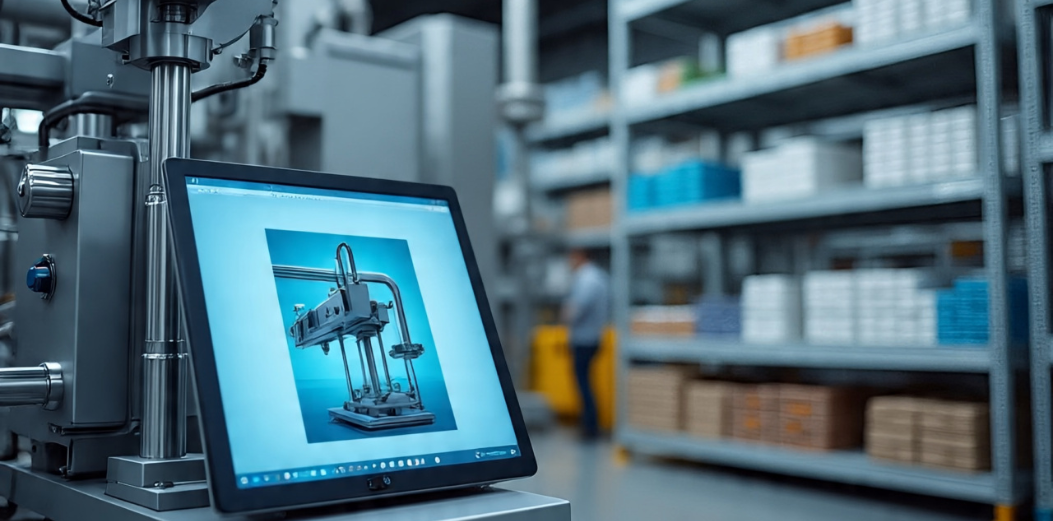
The Contract Development and Manufacturing Organization (CDMO) sector is at a strategic inflection point. Biotech pipelines are overflowing with complex biologics, cell therapies, and personalized medicines. Simultaneously, market pressures demand unprecedented speed, efficiency, and cost containment. In this high-stakes environment, the foundational principles of pharmaceutical manufacturing are being rewritten by Pharma 4.0. The core catalyst for this evolution is the digital twin.
Far from a simple 3D model, a digital twin functions as a high-fidelity, living virtual proxy of a physical manufacturing asset, process, or even an entire facility. For CDMOs, this technology is the essential bridge to harnessing the full power of their data within a strict cGMP framework (Atkins Realis, 2024). This article provides real-world insights into digital twin implementation in pharma CDMO manufacturing, detailing its practical benefits, phased implementation, and its role in creating the competitive, agile, and compliant manufacturing floor of the future.
What Is a Pharma Digital Twin, and What Is It Not?
Before exploring the benefits, it is crucial to establish a clear definition. A digital twin is a dynamic, virtual representation of its real-world counterpart. The key is its persistent, two-way connection. It uses a constant stream of data from IoT sensors, process analytical technology (PAT), and manufacturing systems to mirror the exact, real-time state of the physical asset. In return, its analytical models provide insights to predict, control, and optimize that asset’s behavior (PSC Software, 2024).
Moving Beyond Static Simulation
Many mistake digital twins for advanced, one-off simulations, but this comparison misses the fundamental difference. This is a critical distinction that must be understood. A traditional simulation is a static tool. Engineers feed it historical or hypothetical data to run a specific “what-if” scenario, such as modeling fluid dynamics in a new bioreactor design before it is built. It is a one-way, temporary analysis.
A digital twin, in contrast, is a living, dynamic ecosystem. It is persistently connected to its physical counterpart, evolving as it does. It does not just use static data for a single test; it uses a continuous flow of real-time data to mirror the asset’s current state, analyze its performance against historical data, and predict its future state. Where a simulation answers “What if…?”, a digital twin answers “What is happening now, what will happen next, and what should we do about it?” (DelveInsight, 2025).
The Core Components of a cGMP Digital Twin
A functional digital twin in a CDMO is an integrated framework, not a single software purchase. It consists of several interconnected layers:
- The Physical Asset: This can be a single piece of equipment (a bioreactor, a chromatography skid, a filling line) or an entire process (like a cell culture unit operation).
- Data Acquisition: A network of IoT sensors and PAT tools that collect and transmit real-time data on critical process parameters (CPPs) and critical quality attributes (CQAs).
- Data Communication & Contextualization: A robust IT/OT infrastructure that gathers data from disparate sources (the sensors, LIMS, MES, ERP) and gives it context, creating a single source of truth.
- The Analytical Engine: This is the “brain.” It integrates physics-based mechanistic models (like computational fluid dynamics) with data-driven machine learning (ML) models to generate insights (The Medicine Maker, 2025).
- The Visualization Layer: An intuitive dashboard, often using AR/VR, that allows operators and scientists to “see” the process, review alerts, and understand the twin’s recommendations.
The “Why”: Transforming CDMO Value for Biotech Sponsors
The business case for digital twin implementation in pharma CDMO manufacturing is compelling because it directly addresses the industry’s most significant pain points. The benefits are tangible for both the CDMO’s operational efficiency and the sponsor’s product lifecycle.
Revolutionizing Process Development and Scale-Up
The journey from a 1L benchtop process to a 2000L cGMP run is fraught with risk. Digital twins offer a new, data-driven path.
- In-Silico Process Optimization: Instead of running dozens of resource-intensive lab experiments, process development (PD) scientists can use a validated digital twin to run thousands of virtual experiments. This allows them to optimize CPPs and understand the design space in a fraction of the time and cost (Körber Pharma, 2024).
- De-Risking Scale-Up: This is perhaps the twin’s most powerful application. The
CDMO Cell and Gene Therapy Scale-Up Challenges: Key Issues and Solutionsare a perfect example of where this technology shines. A twin can model the sponsor’s process using the exact geometry and specifications of the CDMO’s commercial-scale bioreactors. This proactively identifies scale-dependent risks like shear stress, poor oxygen transfer, or mixing inconsistencies before the first expensive cGMP batch is initiated (The Medicine Maker, 2025).
Accelerating and De-Risking Technology Transfer
Technology transfer is a notorious bottleneck, often relying on dense documents and the “tribal knowledge” of a few scientists. A digital twin institutionalizes that knowledge.
A sponsor can deliver their process not as a 200-page document, but as a validated digital twin. The CDMO can then “plug” this process twin into their own facility’s “asset twin” for a virtual fit-test. This can immediately flag incompatibilities—for example, showing that the sponsor’s mixing parameters will create a vortex with the CDMO’s impeller design. This simulation-first approach, as highlighted by VirtECS, can speed up time-to-market by weeks or even months by ensuring the process is right the first time (VirtECS, 2024).
Predictive Maintenance and Unlocking OEE
In manufacturing, unplanned downtime is the enemy of profitability. A single equipment failure during a cGMP run can lead to the total loss of a multi-million dollar batch. Digital twins enable a shift from preventive to predictive maintenance (PdM).
By analyzing real-time sensor data (like vibration, temperature, and motor torque), the twin’s ML models can detect subtle patterns that are invisible to human operators. It can predict a specific gearbox or pump will fail within the next 14-21 days (INSIA, 2025). This allows the CDMO to schedule maintenance during a planned changeover, eliminating unplanned downtime, extending equipment life, and protecting the sponsor’s batch.
A New Paradigm for Quality and Compliance
For regulators at the FDA and EMA, a digital twin is the ultimate expression of Quality by Design (QbD) and Process Analytical Technology (PAT).
- Golden Batch Monitoring: The twin can establish a “golden profile” from all successful prior batches. It then monitors the live batch against this multi-dimensional profile in real-time, not just against simple, static upper and lower control limits.
- Real-Time Anomaly Detection: The system flags trends and drifts long before they become out-of-specification (OOS) deviations. This allows operators to intervene proactively. This real-time oversight is the entire principle behind
How Real-Time Temperature Monitoring Protects Pharmaceutical Shipments, but applied to the entire manufacturing process. - Living Validation: The twin provides a continuous, auditable, and unchangeable record of the process, effectively serving as a “living” process validation and continuous process verification (CPV) package. This level of data integrity and transparency is invaluable during regulatory audits, especially for complex products like those requiring a
Cell Therapy CDMO Regulatory Compliance Guide: Essential Pathways.
A Real-World Phased Implementation Strategy for CDMOs
A CDMO cannot build a fully autonomous twin of its entire network overnight. A successful digital twin implementation in pharma CDMO manufacturing is a practical, phased journey that builds value and capability incrementally.
Phase 1: The “Digital Shadow” (Descriptive)
The first step is to create visibility. The goal is to answer the question, “What is happening right now?”
- Pilot Selection: Start with a single, high-value asset or process, such as a commercial bioreactor, a chromatography column, or a critical filling line.
- Sensor Integration: Retrofit the asset with the necessary IoT sensors (temperature, pressure, flow, vibration, etc.) and PAT tools (spectroscopy, particle counters).
- Data Unification: Connect these sensors and existing systems (MES, LIMS) to a central data platform.
- Visualization: Create real-time dashboards that allow operators and supervisors to see the process state, ending their reliance on disparate, lagging data sources. The value at this stage is immediate visibility and faster manual troubleshooting.
Phase 2: The “Digital Twin” (Predictive)
With a foundation of data, the next phase is to build intelligence. The goal is to answer, “What will happen next?”
- Model Development: Data scientists use the historical data from Phase 1 to train machine learning models. These are combined with mechanistic (physics-based) models to create a high-fidelity virtual replica.
- Predictive Analytics: The twin can now forecast outcomes. For example: “Based on the current viable cell density and off-gas analysis, this batch will reach peak titer in 22 hours, but will experience a 15% drop-off due to glutamine depletion by hour 18.”
- Decision Support: This predictive insight is fed to operators as a decision support tool, allowing them to adjust the feed strategy and optimize the final yield.
Phase 3: The “Prescriptive & Autonomous Twin”
This is the ultimate goal: a self-optimizing process. The twin answers, “What should we do?”
- AI-Driven Recommendations: The twin not only predicts the 15% yield loss but also prescribes the optimal solution: “Increase glutamine feed rate by 0.4 L/hr starting at hour 17.5 to maximize final titer.”
- Closed-Loop Control: In its most advanced form, the twin is integrated with the process control systems (DCS/PLC). It can autonomously execute the prescribed change, steering the process in real-time. This is the vision of
CDMO AI Automation Software: Accelerating Pharma Manufacturing, where the twin acts as the intelligent “brain” for a fully automated, self-correcting manufacturing process (Simbo AI, 2025).
H2: Overcoming the Implementation Hurdles
The benefits are clear, but the path to digital twin implementation in pharma CDMO manufacturing is complex. CDMOs must be clear-eyed about the challenges.
The Challenge of Data and Integration
The single biggest hurdle is data. Pharmaceutical manufacturing is infamous for its “data silos,” with information trapped in legacy systems, paper batch records, and disconnected equipment.
- Integration: A digital twin requires a horizontal, integrated data architecture. A CDMO must invest in the IT/OT infrastructure to connect these islands of information.
- Data Quality: The data must be accurate, complete, and trusted. A twin running on “dirty” data will produce flawed insights. This requires a strong data governance and data integrity program (Toobler, 2024).
The Challenge of People and Culture
Technology is only half the battle. A successful implementation is a change management program.
- The Skills Gap: A CDMO needs a new blend of talent, including data scientists, bioprocess engineers, and automation specialists.
- Cultural Resistance: Operators and scientists who have trusted their “gut feel” for decades may be skeptical of an algorithm’s recommendations. A top-down executive mandate and bottom-up operator engagement are essential to build trust and show how the twin makes their jobs easier and more effective, not obsolete (Industry Outlook, 2024).
The Challenge of Cost and ROI
A digital twin is a significant capital and operational investment. The sensors, software licenses, cloud infrastructure, and data scientists are not cheap.
- Justifying the Cost: The ROI case must be built on tangible, high-value problems: preventing batch loss, reducing tech transfer time, increasing OEE, and avoiding downtime.
- Competitive Necessity: Increasingly, this is not a matter of choice. Leading CDMOs, including innovative players in emerging markets like those on the
India CDMOs to Watch 2025: Key Companies, Trends, and Innovationslist, are adopting digital technologies to prove their quality and win contracts. It is becoming a competitive necessity.
The Future: The Federated Twin and the Sponsor-CDMO Ecosystem
The future of the digital twin in the CDMO space lies beyond a single facility. The next evolution is the “Federated Digital Twin.”
In this model, a biotech sponsor’s digital twin of their product (developed in R&D) will “federate” or connect with the CDMO’s digital twin of their facility. This creates a shared, secure, real-time source of truth for both partners.
Imagine the power of this ecosystem:
- Instant Tech Transfer: The sponsor’s process twin is virtually docked with the CDMO’s asset twin to validate compatibility in hours, not months.
- Shared Visibility: The sponsor can log into a secure portal and see the real-time cGMP performance of their batch, its position against the “golden profile,” and any predictive alerts.
- Collaborative Problem-Solving: If an anomaly is detected, both the sponsor’s and CDMO’s experts are alerted simultaneously, viewing the exact same data and collaborating instantly on a solution.
This creates a level of transparency, trust, and co-development that transforms the traditional client-vendor relationship into a true digital partnership (Siemens, 2024).
Frequently Asked Questions (FAQs)
1. What is a digital twin in pharma manufacturing? A digital twin is a dynamic, virtual replica of a physical process or asset, like a bioreactor or filling line. It is fed by real-time sensor data and uses AI to monitor, predict, and optimize the process, moving far beyond simple simulation.
2. What is the main benefit of a digital twin for a CDMO? The primary benefit is shifting from reactive to predictive manufacturing. This de-risks tech transfer, enables predictive maintenance to eliminate batch loss, accelerates process development, and ensures a higher, more consistent level of cGMP compliance.
3. How does a digital twin improve tech transfer? It acts as a dynamic “digital blueprint” of the process. A sponsor provides their process twin to the CDMO, who can “virtually” run it on their own facility’s twin. This identifies equipment gaps, scaling issues, and integration problems before the first physical, high-cost cGMP run (VirtECS, 2024).
4. Is a digital twin the same as a simulation? No. A simulation is a static, offline tool for “what-if” analysis using hypothetical data. A digital twin is a living, real-time, persistent model that is continuously updated with live data from its physical counterpart. It shows “what is” and “what will be” (DelveInsight, 2025).
5. What are the biggest challenges to implementing a digital twin? The three biggest challenges are 1) Data: integrating “siloed” legacy systems and ensuring cGMP data integrity, 2) Culture: overcoming resistance to change and training staff on new digital skills, and 3) Cost: the significant upfront investment in sensors, software, and talent (Toobler, 2024).
Conclusion
Digital twins are no longer a futuristic concept for pharma; they are a practical, powerful, and value-generating tool that is being implemented today. For a Contract Development and Manufacturing Organization, this technology is a profound operational upgrade. It offers a tangible path to solving the industry’s most enduring challenges: slow tech transfers, costly batch failures, and reactive quality control.
The digital twin implementation in pharma CDMO manufacturing is rapidly becoming a key indicator of a service provider’s commitment to quality, efficiency, and innovation. For biotech sponsors, choosing a CDMO partner that has embraced this digital transformation is no longer a “nice to have”; it is a powerful way to de-risk their most valuable assets and accelerate their path to the patient. For CDMOs, the message is clear: the digital future is here, and the leaders of tomorrow are building their twins today.
References
Atkins Realis. (2024). Understanding Digital Twins and Their Role in Pharma 4.0. https://www.atkinsrealis.com/en/engineering-better-future/beyond-engineering/understanding-digital-twins-and-their-role-in-pharma
PSC Software. (2024). Digital Twin Technology: Unlocking Pharma & Biopharma Potential. https://pscsoftware.com/digital-twin-technology-pharma-biopharma/
DelveInsight. (2025). Digital Twins Applications and Challenges in the Healthcare Domain. https://www.delveinsight.com/blog/digital-twin-technology-challenges-and-applications
The Medicine Maker. (2025). Digital Twins in Bioprocessing Explained. https://themedicinemaker.com/issues/2025/articles/october/digital-twins-in-bioprocessing-explained/
Körber Pharma. (2024). What is a Bioprocess Digital Twin? https://www.koerber-pharma.com/blog/what-is-a-bioprocess-digital-twin
VirtECS (Combination.com). (2024). How Contract Manufacturers Can Use a Digital Twin to Overcome Slowing Demand Post-Pandemic. https://combination.com/how-contract-manufacturers-can-use-a-digital-twin-to-overcome-slowing-demand-post-pandemic/
INSIA. (2025). How Digital Twins Enhance Predictive Maintenance in Manufacturing? https://www.insia.ai/blog-posts/digital-twins-enhance-predictive-maintenance-manufacturing
Toobler. (2024). Implementing Digital twins in Healthcare: Challenges & Solutions. https://www.toobler.com/blog/overcome-challenges-in-implementing-digital-twins-in-healthcare
Siemens. (2024). Process Digital Twin for Pharma. https://www.siemens.com/global/en/company/stories/digital-transformation/digital-twin-pharma.html
Simbo AI. (2025). Exploring the Impact of Digital Twins on Pharmaceutical Manufacturing. https://www.simbo.ai/blog/exploring-the-impact-of-digital-twins-on-pharmaceutical-manufacturing-and-process-optimization-2474018/


