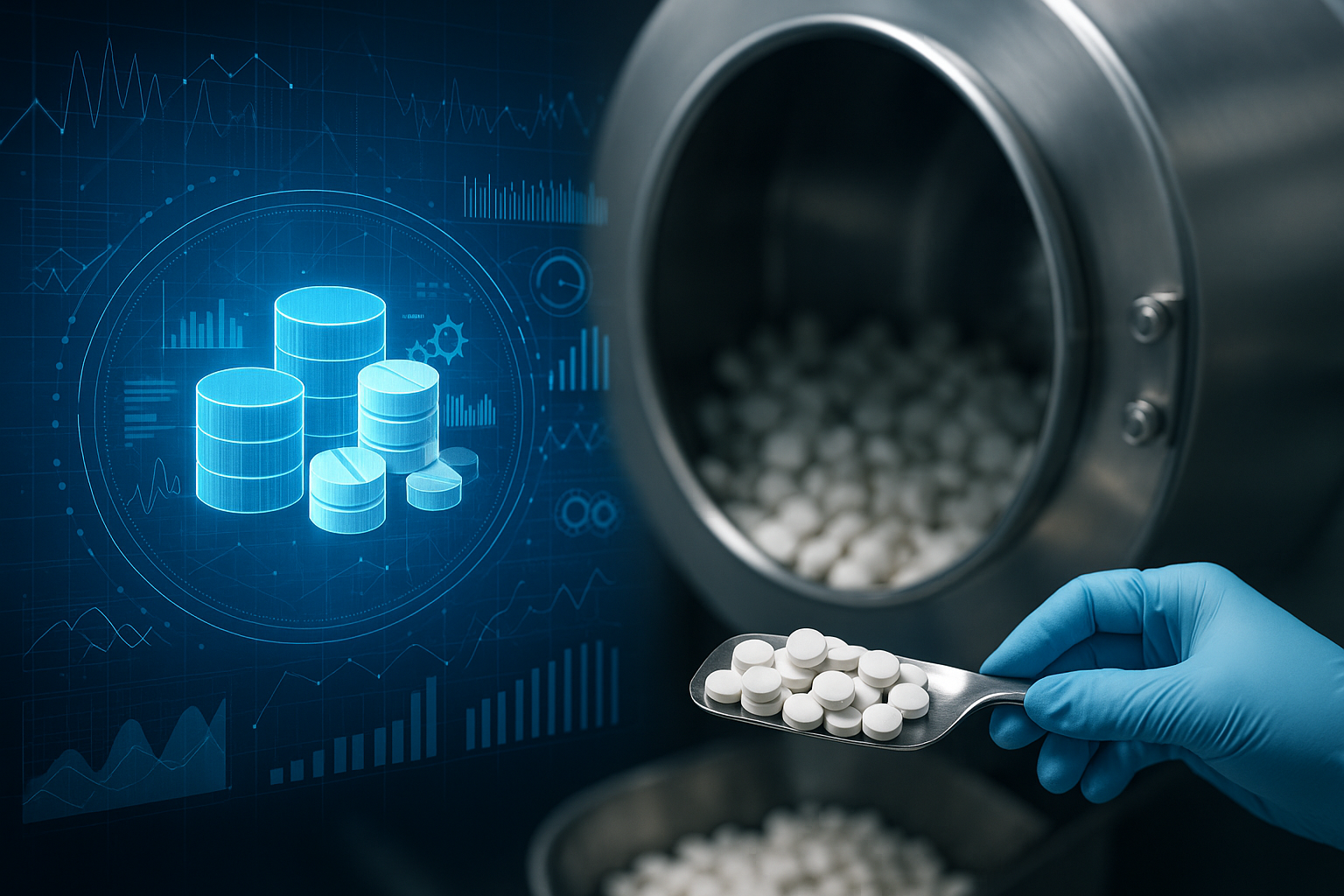
CDMOs are under constant pressure to innovate faster, reduce development timelines, and deliver high-quality pharmaceutical products. In a landscape driven by complexity—from biologics and mRNA vaccines to personalized medicines—traditional formulation approaches often fall short.
Enter digital twins: advanced, data-rich simulations that replicate real-world formulation processes in a virtual environment. What began in aerospace and manufacturing has now matured into a powerful force in pharmaceutical R&D and production. According to McKinsey & Company, digital twins have the potential to reduce time to market by 50% and improve productivity significantly in pharmaceutical operations.
What is a Digital Twin in Pharma?
A digital twin is a real-time, virtual representation of a physical product, process, or system. It integrates data from sensors, IoT devices, laboratory instruments, and historical records to simulate how a formulation will behave in varying conditions. Unlike traditional modeling, digital twins continuously evolve with real-world input.
As outlined by Deloitte, digital twins are key components of the next-generation pharma manufacturing landscape, enabling smarter decisions and faster iteration.
In formulation development, a digital twin can:
- Simulate excipient-drug interactions
- Predict physical and chemical stability
- Optimize mixing, granulation, and coating processes
- Model bioavailability and solubility profiles
The CDMO Challenge: Why Digital Twins Matter Now
CDMOs face unique challenges:
- Diverse client portfolios and formulation types
- Accelerated timelines for clinical manufacturing
- Complex tech transfers between R&D and commercial sites
- Regulatory scrutiny over process consistency and data integrity
According to Pharma Manufacturing, digital twins provide real-time insights into manufacturing, enabling preemptive correction of quality issues, enhancing reproducibility, and reducing batch failures by up to 30%.
Digital twins reduce uncertainty and create a shared, data-driven language across stakeholders.
Enabling Technologies Behind Digital Twins in Pharma
1. Advanced Data Analytics and Machine Learning
Machine learning algorithms interpret massive datasets—formulation trials, PAT (Process Analytical Technology) outputs, historical deviations—to identify patterns and predict outcomes. These models refine themselves continuously with each new batch.
As highlighted in MIT Technology Review, AI-enhanced digital twins bring high adaptability and predictive power to pharmaceutical development.
2. IoT and Real-Time Sensing
IoT devices embedded in mixers, blenders, and reactors feed real-time data to the digital twin. This includes temperature, pressure, pH, particle size, and more. According to National Instruments, these inputs are essential for feedback loops and adaptive control.
3. High-Performance Computing and Cloud Infrastructure
Cloud platforms like AWS TwinMaker or Microsoft Azure support scalable, real-time data processing for digital twins. As noted by Amazon Web Services, cloud-based twins help streamline cross-functional collaboration and version control in pharma operations.
4. AR/VR for Visualization
Augmented Reality (AR) applications allow CDMOs to visualize and interact with their digital twin models on the shop floor—enabling preventative maintenance and better SOP execution.
Digital Twin Use Cases in Formulation Development
1. Excipient Optimization
Using a digital twin, CDMOs can simulate how changes in excipient ratios affect tablet disintegration, dissolution, and stability—without physically manufacturing dozens of batches. According to a study in the Journal of Pharmaceutical Innovation, simulation-based optimization shortened development time by 40%.
2. Continuous Manufacturing Modeling
Digital twins of continuous manufacturing lines predict how variables like flow rate or humidity impact quality. As explained by ISPE, these simulations enable real-time deviation control.
3. Predicting Scale-Up Behavior
Digital twins bridge the lab-to-commercial gap by modeling scale-up issues such as shear stress or fluid dynamics. They are a powerful tool in minimizing batch failure during technology transfer.
4. Risk-Based Tech Transfer
Instead of static documentation, CDMOs can share evolving digital twin models with clients—highlighting critical process parameters in real time.
5. Regulatory Simulation
Simulating worst-case scenarios for regulators helps CDMOs prepare better control strategies and defend deviations using digital evidence. This aligns with FDA’s QbD and PAT initiatives as outlined in their guidance.
The Impact on Speed, Cost, and Quality
| Metric | Traditional Approach | With Digital Twins |
|---|---|---|
| Time to Optimize Formulation | 6–12 months | 2–4 months |
| Number of Batches for Optimization | 30–50 | <10 |
| Batch Failure Risk | Medium to High | Low |
| Cost of Development | High | Significantly Reduced |
| Regulatory Readiness | Manual & Reactive | Automated & Predictive |
As reported in a PwC digital operations study, companies integrating digital twin systems reported cost savings of up to 20% and accelerated time-to-market.
Barriers to Adoption (And How CDMOs Can Overcome Them)
1. Data Silos
Data lives in multiple systems (LIMS, MES, SCADA). Unifying them into a cohesive twin demands investment in integration tools and data standards.
2. Cultural Resistance
Digital transformation requires new mindsets. Demonstrating early wins through pilot projects is key.
3. Upfront Investment
Initial cost is high, but ROI is measurable within the first year in terms of batch yield and regulatory alignment.
4. Regulatory Uncertainty
According to ISPE GAMP 5, digital systems must be validated using risk-based approaches. CDMOs should document models thoroughly and establish clear audit trails.
Future Outlook: What’s Next for Digital Twins in CDMOs?
The next five years will see:
- AI-QbD integration
- Digital twin packages as part of CDMO offerings
- Self-updating twins with reinforcement learning
- Real-time regulatory twin threads for submission
Per IDC Health Insights, over 70% of pharma companies plan to use digital twins in R&D or manufacturing by 2026.
Conclusion: The Digital Twin Advantage
Digital twins are not just a buzzword—they’re foundational to how leading CDMOs are reshaping formulation science. From batch optimization to tech transfer, they empower smarter decisions, tighter control, and faster delivery.
By aligning innovation with data integrity and compliance, CDMOs can elevate their position from service provider to strategic development partner.
FAQs: Digital Twins in CDMO Formulation
1. Are digital twins regulatory compliant?
Yes, when properly validated. Agencies like the FDA support their use under QbD and PAT frameworks, as shown in FDA’s modeling guidance.
2. Can small or mid-sized CDMOs afford digital twins?
Yes. Cloud-based platforms such as Siemens Simcenter and AWS TwinMaker allow modular adoption and minimal upfront infrastructure.
3. How are digital twins different from simulation models?
Simulations are static. Digital twins are dynamic and continuously updated with live data.
4. What skills do CDMO teams need to use digital twins?
A hybrid team of data scientists, engineers, and formulation scientists. Some CDMOs collaborate with AI-focused pharma tech firms to close gaps.
5. Can digital twins replace lab work entirely?
No—but they reduce the need for redundant physical trials and help prioritize experiments with the highest ROI.


