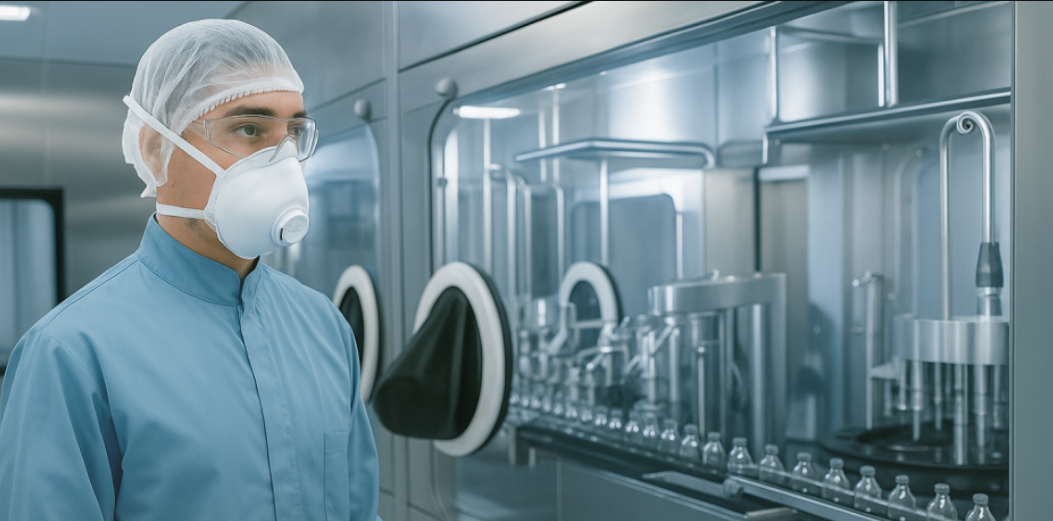
Introduction: Why Europe CDMO Biologics Sterile Fill Matters
The biologics industry is entering a decisive era. Global demand for advanced therapies such as monoclonal antibodies, gene therapies, RNA-based medicines, and vaccines is accelerating. To deliver these complex products, manufacturers must navigate one of the most critical and high-risk stages of the production chain: sterile fill-finish.
This stage involves transferring a biologic into its final container under conditions that must remain free of microbial or particulate contamination. The complexity of biologics, combined with strict regulatory oversight, makes sterile fill one of the most technically demanding operations in modern pharmaceutical manufacturing.
In this environment, Europe CDMO biologics sterile fill facilities are becoming indispensable. Contract development and manufacturing organizations (CDMOs) across the continent are stepping up investment, upgrading aseptic infrastructure, and expanding their technical expertise. For biotech companies, particularly emerging players with limited in-house resources, choosing the right sterile fill partner can determine whether a therapy successfully reaches patients.
Expanding Capacity: Europe CDMO Biologics Sterile Fill in Demand
Europe’s CDMOs have significantly expanded their sterile fill operations over the last decade. This growth has been fueled by an unprecedented pipeline of biologics entering clinical and commercial stages.
Many emerging biotech companies lack the financial or technical capacity to build dedicated sterile fill facilities. Instead, they turn to specialized European CDMOs capable of handling both small-batch clinical trial material and large-scale commercial supply. This outsourcing trend reduces risk, accelerates timelines, and aligns with evolving regulatory standards.
An important development is the rise of Small-Batch Biologics CDMO Capacity: A Game-Changer for Emerging Biotech. These specialized capabilities allow smaller firms to generate clinical data rapidly without committing to oversized manufacturing contracts. By offering flexibility and scalability, European CDMOs give biotech innovators the confidence to progress through clinical phases while preparing for eventual market launch.
The ability of Europe’s CDMOs to manage small, medium, and large-scale sterile fill projects positions them as the backbone of the continent’s biologics industry.
Regulatory Framework and Europe CDMO Biologics Sterile Fill Standards
For the production of sterile fill biologics, the European Medicines Agency (EMA) sets strict quality and compliance standards. Facilities must align with EU GMP standards, including Annex 1, which places heightened emphasis on contamination control strategies, real-time monitoring, and environmental control.
For Europe CDMO biologics sterile fill operations, compliance is not optional—it is a business necessity. Recent updates to Annex 1 mandate that CDMOs develop risk-based contamination control strategies, emphasizing preventive over reactive measures. This has pushed CDMOs to adopt isolator-based technologies, automation, and advanced environmental monitoring systems.
By prioritizing transparency, digital data collection, and regulatory harmonization, European CDMOs not only ensure safe production but also enhance their ability to serve global markets beyond the EU.
Technology Driving Europe CDMO Biologics Sterile Fill Forward
Sterile fill manufacturing is evolving with the adoption of next-generation technology. Europe’s CDMOs are at the forefront of implementing advanced solutions to reduce risk, increase throughput, and meet client needs.
Human intervention, the main source of contamination in sterile environments, is being reduced by robotic automation. Single-use technologies allow for faster changeovers between products, which is vital for companies managing diverse pipelines. Furthermore, closed-vial filling technologies provide an extra layer of sterility assurance while minimizing exposure risks.
Cold chain integration has also become a defining factor. Biologics often require ultra-low-temperature storage and distribution. As highlighted in IoT in the Cold Chain: Real-Time Monitoring for Biologics, the use of connected sensors and IoT-enabled tracking ensures biologics remain within strict temperature ranges during transport. Europe’s CDMOs are embedding such technologies into their sterile fill operations to guarantee end-to-end compliance and reliability.
Strategic Partnerships: Choosing the Right CDMO Partner
Selecting a sterile fill CDMO is a strategic decision that impacts not only manufacturing but also market timelines, regulatory approval, and investor confidence. Europe CDMO biologics sterile fill service providers vary in scale, specialization, and technical expertise.
Emerging biotechs, in particular, must carefully evaluate potential partners to ensure they offer the right balance of flexibility, scalability, and regulatory credibility. Guidance such as Pharmaceutical Contract Manufacturing Consulting: How to Choose the Right CDMO Partner provides critical frameworks for assessing facilities. Criteria such as compliance history, scalability, and technology adoption must be considered.
For example, a biotech developing a niche therapy may prioritize small-batch flexibility, while a company preparing for commercial launch may focus on CDMOs with established large-scale filling lines. The right partner is not necessarily the largest but the one best aligned with the specific needs of the therapy and company.
Cold Chain Logistics in Europe CDMO Biologics Sterile Fill
Sterile fill biologics manufacturing extends beyond the production floor into the cold chain. Maintaining temperature control between 2–8°C is critical to ensuring biologics retain stability and potency.
European CDMOs are enhancing their cold chain systems with redundancies, smart freezers, and digital validation tools. As outlined in Pharmaceutical Cold Chain Logistics: The Complete 2–8°C Guideline for 2025, these improvements are essential for therapies that degrade rapidly outside strict temperature windows.
By embedding robust cold chain management into their sterile fill services, Europe’s CDMOs provide sponsors with comprehensive assurance that therapies will remain viable across the entire supply chain—from the aseptic vial filling line to the final point of care.
Benchmarking Europe CDMO Biologics Sterile Fill Capabilities
Europe’s sterile fill landscape is diverse, with regional hubs such as Germany, Switzerland, Ireland, and Belgium serving as central players. Each hub offers unique advantages, from specialized equipment to highly trained personnel and regulatory track records.
Continuous innovation and capacity development are fueled by CDMO competitiveness. For biotech companies, benchmarking these facilities is a necessary step to avoid delays and costly misalignments. Resources like How to Choose a Sterile Fill-Finish CDMO: 2025 Checklist provide structured evaluation methods, helping sponsors assess cleanroom classifications, filling line technologies, cold chain redundancies, and compliance histories.
European CDMOs that combine flexibility with high-quality standards stand out as the most reliable partners in a highly competitive landscape.
Future Outlook: Scaling Europe CDMO Biologics Sterile Fill for Advanced Therapies
The future of Europe CDMO biologics sterile fill is defined by scalability and adaptability. Advanced therapies, including cell and gene therapies, require sterile fill processes that go beyond conventional vial filling. Personalized medicine introduces batch sizes as small as a single patient, demanding unprecedented flexibility from CDMOs.
To meet these challenges, Europe’s CDMOs are investing in modular cleanroom facilities, digital twins, and predictive analytics. These innovations will enable real-time adjustments, minimizing downtime and ensuring that even the most sensitive therapies can be produced safely.
As biologics pipelines grow and diversify, the demand for Europe CDMO biologics sterile fill capacity will intensify. CDMOs that align with innovation, compliance, and integrated cold chain management will remain at the center of the global biologics supply chain.
The Competitive Advantage of Europe CDMO Biologics Sterile Fill Providers
Europe’s CDMOs have gained a strong competitive advantage in the global biologics supply chain due to their strategic location, scientific expertise, and regulatory credibility. Unlike other regions, Europe combines decades of pharmaceutical manufacturing tradition with cutting-edge investments in sterile fill infrastructure.
The European Union’s harmonized regulations provide CDMOs with a compliance framework that is trusted worldwide. As a result, biologics manufactured and sterile filled in Europe are widely accepted across the U.S., Japan, and other global markets. This makes Europe CDMO biologics sterile fill partners attractive to biotech firms aiming to commercialize internationally.
Another factor is the dense ecosystem of suppliers, research institutes, and logistics providers located near CDMO hubs. This interconnected network ensures that CDMOs can access raw materials, talent, and cold chain solutions rapidly, reducing production risks.
Scaling Sterile Fill Operations for Global Biologics Demand
One of the defining features of the Europe CDMO biologics sterile fill sector is its ability to scale rapidly in response to global demand shocks. During the COVID-19 pandemic, European CDMOs demonstrated their agility by shifting resources toward vaccine fill-finish operations at unprecedented speed.
Today, this scalability remains a core expectation. As biologics pipelines expand, especially in therapeutic areas such as oncology, rare diseases, and infectious diseases, CDMOs must balance flexibility for small-batch projects with the infrastructure needed for high-volume commercial products.
European facilities are now building modular cleanrooms and adopting single-use technologies that allow rapid switching between products. This dual approach—flexible yet scalable—ensures they can serve both early-stage biotech companies and established pharmaceutical giants.
Digital Transformation in Europe CDMO Biologics Sterile Fill
Digital transformation has become a cornerstone of sterile fill innovation. Europe’s CDMOs are integrating automation, machine learning, and artificial intelligence into their operations to improve efficiency and compliance.
Predictive analytics are now being used to forecast equipment maintenance, reducing downtime and minimizing batch losses. Digital twins—virtual replicas of sterile fill facilities—allow operators to simulate processes, test new configurations, and identify risks before implementing changes in real environments.
Data transparency is also critical for regulatory compliance. Advanced digital monitoring provides real-time reporting to both CDMO clients and regulators, ensuring that Europe CDMO biologics sterile fill operations maintain the highest levels of trust and accountability.
Talent and Workforce Development in Sterile Fill Biologics
Another key factor driving Europe CDMO biologics sterile fill leadership is workforce expertise. Sterile fill manufacturing requires highly trained specialists in aseptic processing, quality assurance, and regulatory affairs.
European CDMOs invest heavily in workforce development programs, collaborating with universities and research institutions to train new talent. Continuous professional development is encouraged through specialized GMP workshops and aseptic technique certifications.
This strong talent pool ensures that European facilities can meet rising demand without compromising quality. It also reassures biotech companies that their products are being handled by teams with deep expertise in sterile biologics manufacturing.
Sustainability and Green Manufacturing in Sterile Fill Biologics
Sustainability is increasingly shaping how Europe CDMO biologics sterile fill facilities are designed and operated. With global pressure to reduce carbon emissions and waste, CDMOs are integrating greener solutions without compromising sterility.
Some facilities are adopting closed-loop water systems to reduce consumption, while others are investing in renewable energy sources to power cleanrooms. Single-use systems, while convenient, generate plastic waste, leading CDMOs to explore biodegradable alternatives and recycling partnerships.
These sustainable practices not only meet regulatory and environmental expectations but also resonate with biotech firms seeking eco-conscious manufacturing partners.
Partnerships Between Biotech and Europe CDMO Biologics Sterile Fill Providers
Strategic partnerships are central to the success of Europe’s CDMOs. These collaborations often extend beyond sterile fill services into broader development and regulatory support.
For early-stage biotech firms, CDMOs can act as end-to-end partners, offering formulation development, stability studies, and packaging alongside sterile fill. Larger pharmaceutical companies, meanwhile, often use CDMOs as capacity extensions during market surges.
This partnership model allows Europe CDMO biologics sterile fill providers to integrate more deeply into the global supply chain, ensuring long-term stability and trust.
Challenges Facing Europe CDMO Biologics Sterile Fill Operations
Despite their advantages, Europe’s CDMOs face several challenges:
- Capacity Constraints: The rapid growth of biologics pipelines risks overwhelming available sterile fill capacity, especially for niche therapies requiring small-batch processing.
- Talent Shortages: Although Europe has a strong talent pool, demand for specialized aseptic experts often exceeds supply.
- Regulatory Complexity: Global clients require compliance not only with EMA standards but also with FDA, PMDA, and WHO regulations.
- Cost Pressures: The high capital expenditure of sterile fill facilities and sustainability initiatives can increase service costs for biotech clients.
- Supply Chain Risks: Reliance on imported raw materials and packaging components exposes CDMOs to geopolitical and logistical disruptions.
Addressing these challenges will require ongoing investment, innovation, and collaboration between CDMOs, biotech firms, and regulators.
Case Studies of Europe CDMO Biologics Sterile Fill Success
Several real-world examples demonstrate how European CDMOs have stepped up in sterile fill biologics manufacturing:
- Vaccine Fill-Finish Expansion: During COVID-19, multiple CDMOs in Germany and Belgium expanded capacity within months to supply millions of vaccine doses globally.
- Oncology Therapy Scale-Up: A Swiss CDMO successfully transitioned a monoclonal antibody from clinical-phase small batches to global commercial supply without interruption.
- Gene Therapy Aseptic Filling: An Irish facility developed specialized isolator-based filling lines for viral vectors, ensuring sterility for high-value gene therapies.
These cases illustrate the adaptability, technical expertise, and global significance of Europe CDMO biologics sterile fill services.
Conclusion: Europe CDMO Biologics Sterile Fill as a Global Backbone
Europe CDMO biologics sterile fill providers have positioned themselves as the backbone of the global biologics industry. By expanding sterile fill capacity, integrating digital transformation, and ensuring compliance with rigorous standards, they are meeting the growing demand for advanced therapies.
Their ability to balance small-batch flexibility with large-scale scalability makes them vital partners for both emerging biotech firms and established pharmaceutical companies. Challenges remain—capacity constraints, cost pressures, and sustainability goals—but Europe’s CDMOs continue to step up with innovation and resilience.
As biologics pipelines diversify and patient demand grows, Europe CDMO biologics sterile fill facilities will remain central to ensuring that lifesaving therapies reach patients safely, efficiently, and reliably.
FAQs on Europe CDMO Biologics Sterile Fill
1. What is sterile fill in biologics manufacturing?
Sterile fill refers to the aseptic transfer of biologic drug products into their final containers, such as vials or syringes, under contamination-free conditions.
2. Why are Europe CDMO biologics sterile fill providers important?
They offer specialized facilities, regulatory compliance, and scalability, enabling biotech and pharmaceutical companies to deliver therapies without investing in costly in-house infrastructure.
3. What technologies are used in sterile fill biologics manufacturing?
Robotic automation, isolator technology, single-use systems, digital monitoring, and cold chain integration are commonly used.
4. How do CDMOs ensure regulatory compliance in Europe?
They follow EMA guidelines, including Annex 1, and maintain GMP-certified facilities with advanced contamination control strategies.
5. Can Europe CDMO biologics sterile fill providers handle small and large batches?
Yes, many CDMOs offer both small-batch flexibility for clinical trials and large-scale capacity for commercial supply.
6. What role does cold chain logistics play in sterile fill?
Cold chain systems maintain biologic stability by keeping products within precise temperature ranges, typically 2–8°C, throughout storage and transport.
7. How should a biotech company choose the right CDMO partner?
By evaluating compliance history, technological capabilities, scalability, cold chain infrastructure, and alignment with project-specific needs.
References
- European Medicines Agency (EMA). Good Manufacturing Practice Guidelines. https://www.ema.europa.eu
- BioProcess International. Trends in Fill-Finish Manufacturing. https://bioprocessintl.com
- Pharmaceutical Technology. CDMO Capacity in Biologics. https://www.pharmaceutical-technology.com
- Fierce pharmaceutical. Europe’s Role in Biologics Manufacturing. https://www.fiercepharma.com
- Statista. Global Biologics Market Forecast 2025–2030. https://www.statista.com


