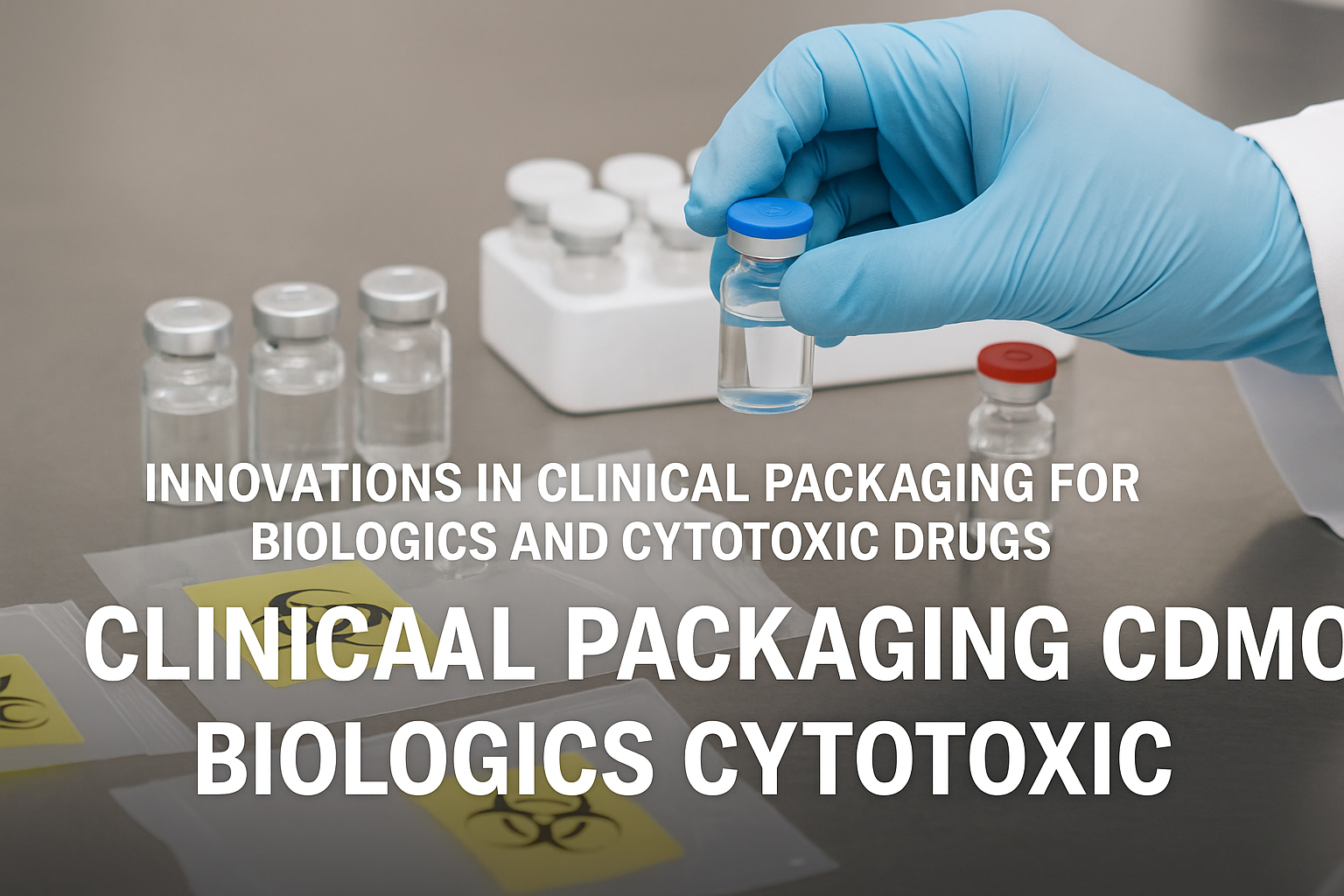
The Growing Importance of Clinical Packaging CDMO Biologics Cytotoxic Services
The pharmaceutical industry has shifted rapidly toward biologics and cytotoxic drugs, creating new demands for packaging solutions that are highly specialized, compliant, and capable of preserving product integrity under complex conditions. Clinical packaging CDMO biologics cytotoxic services are now central to drug development strategies, as outsourcing enables companies to focus on discovery and patient trials while ensuring packaging meets global regulatory and logistical requirements.
The surge in biologics and targeted cytotoxic therapies has intensified the complexity of packaging operations. Unlike conventional small molecules, biologics require stringent cold chain systems, specialized containers, and validated labeling processes that can withstand international distribution. Cytotoxic products demand another level of security, ensuring safety not just for the patient but also for handlers across the supply chain. These complexities have positioned CDMOs as indispensable partners in managing the balance of compliance, scalability, and speed-to-market.
Rising Complexity of Packaging for Biologics and Cytotoxic Drugs
Biologics are inherently fragile, requiring stability in narrow temperature ranges and protection against environmental stresses. Cytotoxic drugs, on the other hand, pose toxicity risks, requiring tamper-evident seals, clear hazard labeling, and specialized disposal instructions. Clinical packaging CDMO biologics cytotoxic solutions must therefore be carefully designed to handle both stability and safety challenges simultaneously.
The cold chain has become a critical component of this ecosystem. Maintaining temperature integrity from manufacturing to patient administration is essential. CDMOs that excel in clinical packaging must integrate expertise in Pharmaceutical Cold Chain Logistics: The Complete 2–8°C Guideline for 2025 to meet the demands of these therapies. Innovations in packaging design now include advanced insulated shippers, temperature-sensitive indicators, and track-and-trace technology to ensure drug stability across the entire journey.
The Role of CDMOs in Clinical Packaging for Emerging Therapies
Contract Development and Manufacturing Organizations (CDMOs) provide specialized clinical packaging CDMO biologics cytotoxic services that combine regulatory expertise, material science, and logistics integration. With rising global trial complexity, CDMOs enable sponsors to streamline operations while reducing risk.
Their roles often extend beyond simple packaging. A modern CDMO integrates real-time monitoring, serialization systems, and adaptive supply chain models. For biologics, CDMOs frequently deploy smart packaging embedded with sensors that monitor environmental conditions. For cytotoxic drugs, safety-engineered packaging protects handlers during transport, minimizing occupational hazards.
As biologics and cytotoxics represent high-value products, any deviation in packaging integrity can translate into significant financial and clinical losses. CDMOs mitigate these risks by embedding validation steps, audit trails, and rapid response systems for How to Manage Temperature Excursions in Pharmaceutical Cold Chain Logistics.
Regulatory Drivers for Clinical Packaging CDMO Biologics Cytotoxic Programs
Compliance is a dominant force in clinical packaging. Biologics and cytotoxic drugs face strict global regulatory scrutiny due to their sensitive profiles. Packaging must adhere not only to Good Manufacturing Practice (GMP) but also to international transport guidelines that govern pharmaceutical trade.
CDMOs offering clinical packaging CDMO biologics cytotoxic capabilities are expected to navigate a landscape of evolving rules. For international distribution, understanding the Regulatory Guide for Shipping Pharmaceuticals Internationally by Sea and Air is essential. Cytotoxic materials require compliance with hazardous goods transportation codes, while biologics demand validated cold chain documentation to avoid shipment rejections.
Clinical trial globalization introduces still another level of difficulty. A single packaging configuration may need to comply with the FDA, EMA, MHRA, and other regional regulators simultaneously. CDMOs that build adaptive systems can harmonize packaging strategies across multiple regions, enabling faster trial launches without regulatory delays.
Cold Chain Technology and Smart Packaging Innovations
Clinical packaging CDMO biologics cytotoxic services increasingly depend on cold chain technologies enhanced by digital tools. Smart packaging solutions now integrate IoT sensors that transmit real-time data, ensuring immediate intervention if conditions deviate from specifications. These systems align closely with the principles outlined in IoT in the Cold Chain: Real-Time Monitoring for Biologics.
Innovations include phase-change materials that maintain stable temperatures for extended durations, GPS-enabled shippers that provide geo-fencing alerts, and blockchain-integrated serialization for traceability. By combining advanced insulation technologies with digital monitoring, CDMOs create a hybrid approach that assures both compliance and security.
For cytotoxic products, digital packaging adds another dimension of safety. Sensors not only track temperature but also ensure containment integrity, reducing the risk of accidental exposure to handlers. The integration of smart labels further improves visibility, allowing all stakeholders in the supply chain to confirm compliance with minimal delays.
Managing Supply Chain Risks in Clinical Packaging
Supply chain disruptions remain a top risk in clinical packaging CDMO biologics cytotoxic programs. Temperature excursions, regulatory holds, and customs delays can undermine product stability and trial timelines. To counter these challenges, CDMOs incorporate contingency planning and robust logistics partnerships.
One critical aspect is customs clearance. Delays at borders can expose biologics and cytotoxics to non-compliant conditions. Insights from Case Study: Pharmaceutical Customs Compliance Lessons Learned illustrate how strategic planning in documentation, labeling, and pre-clearance can prevent such setbacks. CDMOs often leverage centralized distribution hubs, risk-mitigation insurance, and validated rerouting protocols to safeguard shipments.
Furthermore, CDMOs increasingly employ predictive analytics to anticipate risks. By analyzing trade patterns, weather data, and historical lane performance, they can proactively adjust shipping strategies. This level of preparedness reduces the likelihood of costly product loss and ensures patients receive therapies on schedule.
Material Science and Sustainable Packaging Approaches
Clinical packaging CDMO biologics cytotoxic activities are changing as a result of the move toward sustainability. Traditional insulated shippers often rely on polystyrene, which is non-biodegradable and environmentally taxing. CDMOs are innovating with recyclable insulation, bio-based plastics, and reusable container systems that reduce environmental footprint without compromising compliance.
For biologics, material science plays a vital role in barrier protection against light, oxygen, and moisture. Advanced films, foil laminates, and nano-coatings enhance product stability during extended storage. For cytotoxic drugs, tamper-evident closures and puncture-resistant containers are designed to guarantee safety.
Sustainability also aligns with regulatory incentives, as agencies worldwide push for greener operations. CDMOs that combine eco-friendly designs with compliance assurance gain a competitive edge, meeting both sponsor expectations and societal responsibility goals.
Clinical Labeling and Language Localization Challenges
Labeling is another cornerstone of clinical packaging CDMO biologics cytotoxic operations. Labels must provide clear, compliant information while adapting to regional language requirements. Errors in labeling can lead to recalls, patient risks, and regulatory penalties.
Biologics often require extensive labeling due to storage instructions, dosage schedules, and trial identifiers. Cytotoxic products must carry hazard warnings, disposal protocols, and protective handling notes. CDMOs invest in automated labeling systems capable of managing multi-language requirements and variable data printing.
Global trials intensify the complexity. A clinical trial spanning 15 countries may require dozens of label versions, each compliant with local authority standards. CDMOs integrate digital artwork management platforms, ensuring accuracy, version control, and audit readiness.
The Rising Demand for Scalability in Clinical Packaging
As global clinical trials expand, scalability has become one of the most pressing challenges in clinical packaging CDMO biologics cytotoxic solutions. Small-batch packaging for early-stage trials must easily evolve into larger, commercial-scale runs once products move closer to approval. CDMOs that integrate flexible infrastructure can handle shifts in demand without compromising compliance or delivery timelines.
Scalability requires modular packaging lines, adaptive supply chain strategies, and the use of digital twins to simulate and optimize processes before physical scale-up. By anticipating growth, CDMOs minimize disruption and ensure biologics and cytotoxic drugs reach patients consistently, whether in pilot studies or large Phase III programs.
Digital Transformation in Clinical Packaging
Digitalization is redefining clinical packaging CDMO biologics cytotoxic workflows. The adoption of digital twins, artificial intelligence, and machine learning allows CDMOs to predict bottlenecks, simulate packaging runs, and identify potential errors before they occur. These technologies improve overall efficiency and reduce the risks associated with handling sensitive biologics and hazardous cytotoxics.
The digital transformation also includes serialization and track-and-trace technologies. For high-value biologics, serialization ensures that each unit is uniquely identifiable, reducing counterfeiting risks. Cytotoxic products benefit from enhanced traceability, ensuring full accountability from production through patient administration.
Another comparable tool in packaging is blockchain. Its immutable ledger creates transparent records of handling, storage, and transport conditions, further strengthening compliance in clinical packaging CDMO biologics cytotoxic services.
Integrating Advanced Quality Systems
Maintaining quality in clinical packaging for biologics and cytotoxic drugs requires more than traditional GMP practices. Advanced quality systems now employ continuous monitoring, real-time environmental tracking, and data-driven process controls. CDMOs are embedding predictive quality analytics into their operations, allowing them to preemptively identify potential compliance deviations.
Risk-based approaches are particularly important for cytotoxic products. Packaging must protect both the patient and the supply chain workforce. Enhanced validation protocols, container integrity testing, and tamper-resistance mechanisms are all deployed to ensure zero compromise in safety.
Workforce Safety and Specialized Training
Another critical dimension of clinical packaging CDMO biologics cytotoxic operations is workforce protection. Cytotoxic drugs are inherently hazardous, requiring protective equipment, contained packaging environments, and strict handling protocols. CDMOs make significant investments in specialized employee training to guarantee adherence to legal and occupational health requirements.
Preventing product contamination is more of a difficulty for biologics. Staff must be trained to handle aseptic environments, cleanrooms, and advanced packaging equipment that ensures sterility. Combining these two dimensions—worker safety and product safety—is a balancing act that CDMOs manage through training, automation, and strict quality oversight.
Regionalization and Decentralized Clinical Packaging Models
The globalization of trials often necessitates a decentralized approach to clinical packaging. Instead of shipping all products from a single site, CDMOs establish regional hubs that package biologics and cytotoxic drugs closer to trial locations. This strategy reduces transit times, minimizes customs-related delays, and improves overall cold chain resilience.
Regionalization also supports compliance with country-specific labeling, language localization, and regional packaging regulations. By decentralizing operations, CDMOs enhance agility, ensuring biologics and cytotoxic drugs are packaged in compliance with local laws while maintaining uniform quality standards across regions.
Patient-Centric Packaging Approaches
A growing emphasis in clinical packaging CDMO biologics cytotoxic strategies is patient-centric design. Usability and adherence are now just as important in packaging as safety and compliance. Biologics often require self-administration, and packaging designs must facilitate patient-friendly delivery while maintaining sterility and stability.
For cytotoxic drugs, patient safety instructions are critical. Packaging now integrates clear pictograms, bold hazard labels, and simplified dosing information to reduce risks of misuse. CDMOs that adopt human-factor engineering in their packaging design contribute not only to compliance but also to improved patient adherence and safety.
Future Trends in Clinical Packaging CDMO Biologics Cytotoxic Services
Looking ahead, innovations in material science, automation, and data-driven systems will continue to redefine clinical packaging. Sustainable packaging will expand, with biodegradable insulation and reusable systems replacing traditional plastics. Automation will further minimize human error, particularly important in handling cytotoxic compounds.
Artificial intelligence will evolve into a predictive system, not just reacting to risks but actively preventing them through advanced modeling. As biologics and cytotoxics continue to dominate pipelines, CDMOs that leverage these innovations will secure long-term relevance in a highly competitive market.
Conclusion
Clinical packaging CDMO biologics cytotoxic solutions have become a cornerstone of modern pharmaceutical development. The complexity of biologics demands cold chain precision and smart packaging, while cytotoxic products require stringent safety and compliance protocols. CDMOs now play an essential role in harmonizing these demands across global clinical trials.
From regulatory navigation and sustainability to digital transformation and patient-centric packaging, innovations continue to advance the industry. As biologics and cytotoxics remain central to therapeutic pipelines, the reliance on specialized CDMOs will only increase. Those organizations that integrate scalable, digital, and sustainable strategies will define the next era of clinical packaging excellence.
Frequently Asked Questions (FAQs)
1. What is the role of CDMOs in clinical packaging for biologics and cytotoxic drugs?
CDMOs provide end-to-end packaging services, ensuring compliance, safety, and scalability for biologics and cytotoxic drugs in clinical trials.
2. Why is cold chain logistics so critical in clinical packaging CDMO biologics cytotoxic programs?
Biologics are temperature-sensitive and require strict cold chain management to preserve stability and efficacy during storage and transportation.
3. How do CDMOs manage regulatory compliance for cytotoxic packaging?
They follow international guidelines for hazardous materials, implement tamper-evident seals, and adhere to strict transport regulations across regions.
4. What are patient-centric packaging solutions in this context?
These are packaging designs that prioritize usability, safety, and adherence, especially for self-administered biologics and hazardous cytotoxic therapies.
5. How does digitalization support clinical packaging CDMO biologics cytotoxic services?
Technologies like IoT, blockchain, and AI provide real-time monitoring, traceability, and predictive insights to minimize risks in the packaging process.
6. What sustainability practices are being adopted in clinical packaging?
CDMOs are using recyclable insulation, bio-based plastics, and reusable shippers to reduce environmental impact while maintaining compliance.
7. How do CDMOs protect workers handling cytotoxic drugs?
They invest in specialized training, protective equipment, automation, and controlled environments to safeguard employees.
8. What are future trends in clinical packaging for biologics and cytotoxics?
Key trends include sustainable materials, advanced digital twins, increased automation, and predictive AI-driven quality systems.
References
- World Health Organization (WHO) – Good Distribution Practices for Pharmaceutical Products
- U.S. Food and Drug Administration (FDA) – Current Good Manufacturing Practice (CGMP) Regulations
- European Medicines Agency (EMA) – Guidelines on Good Distribution Practice of Medicinal Products
- International Air Transport Association (IATA) – Temperature Control Regulations
- International Society for Pharmaceutical Engineering (ISPE) – Good Practice Guide: Cold Chain Management
- Centers for Disease Control and Prevention (CDC) – Vaccine Storage and Handling Toolkit
- Pharmaceutical Inspection Co-operation Scheme (PIC/S) – Guide to Good Manufacturing Practice for Medicinal Products


